
Pinguecula in Gatineau — See an optometrist
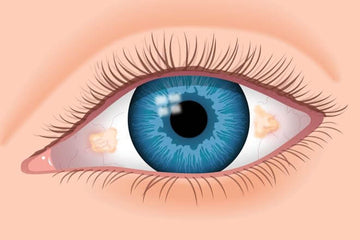
Have you noticed a small, yellowish bump on the white part of your eye? It’s likely a pinguecula. At Altitude Optometry in Gatineau, our optometrists can examine this growth, confirm that it’s benign, and offer solutions to relieve any discomfort if needed.
Redness, irritation, or persistent discomfort? Our eye emergency service in Gatineau is available 7 days a week.
What is a pinguecula?
A pinguecula is a small yellowish or whitish growth that forms on the conjunctiva, the transparent membrane that covers the white of the eye.
It is a benign, noncancerous growth that results from the degeneration of collagen fibers in the conjunctiva. It is very common and affects millions of people worldwide, particularly those who spend a lot of time outdoors.
Although a pinguecula generally does not threaten vision, it can sometimes cause irritation, redness, or a feeling of dryness that affects daily comfort. In rare cases, it can become inflamed. This condition is called pingueculitis and requires treatment by an optometrist.
Causes of pinguecula
A pinguecula develops gradually in response to repeated irritation of the eye's surface. Here are the main causes:
UV Exposure: This is the primary cause. Prolonged and cumulative exposure to the sun without adequate protection damages the collagen fibers in the conjunctiva. Residents of Gatineau and the Outaouais region who engage in outdoor activities such as skiing, cycling, hiking, or golf are particularly at risk, especially in winter when snow reflects UV rays.
Wind, dust, and dry air: Frequent exposure to wind and environmental irritants contributes to the development of a pinguecula. The dry, windy winters typical of the Gatineau region, combined with indoor heating that dries out the air, create conditions conducive to this condition.
Chronic dry eye: A lack of natural lubrication in the eye increases the risk of developing a pinguecula. People who work long hours in front of a screen—a common reality for federal employees and office workers in the Gatineau-Ottawa region—blink less frequently, which contributes to dry eye.
Prolonged contact lens wear: Chronic irritation caused by contact lenses can contribute to the development of a pinguecula, especially if the lenses are worn in dry or dusty environments.
Age: Pinguecula is more common in adults over the age of 40, but it can develop at any age in people exposed to significant risk factors.
Symptoms of pinguecula
A pinguecula may remain asymptomatic for years. When symptoms do occur, they may include:
Visible bump on the white of the eye: A small, slightly raised yellowish or whitish spot visible to the naked eye. It is usually located on the nasal side, between the pupil and the inner corner of the eye.
Foreign body sensation: The feeling that there is something in the eye, such as a grain of sand. This sensation is often more pronounced when wearing contact lenses.
Redness around the lesion: The conjunctiva surrounding the pinguecula may become red and irritated, especially when exposed to wind, dust, or dry air.
Dry eye: A pinguecula can disrupt the distribution of the tear film across the surface of the eye, creating dry patches that cause discomfort.
Inflammation (pingueculitis): In some cases, a pinguecula may become inflamed, turning red, swollen, and painful. Pingueculitis requires treatment by an optometrist, usually with anti-inflammatory eye drops.
Pinguecula vs. Pterygium — What's the Difference?
Pinguecula and pterygium are two conditions that affect the conjunctiva, but they are different:
Pinguecula — Remains on the conjunctiva (the white of the eye) and does not extend onto the cornea. It is generally benign and rarely causes vision problems.
Pterygium — Gradually spreads across the cornea (the transparent surface of the eye) and, in advanced cases, can affect vision by distorting the cornea or blocking the visual axis. Pterygium sometimes requires surgery.
A pinguecula may eventually develop into a pterygium if exposure to UV rays and irritants continues without protection. This is one of the reasons why regular follow-up visits with an optometrist in Gatineau are recommended.
Diagnosis in Gatineau
Diagnosing a pinguecula is quick and easy. At Altitude Optometry in Gatineau, our optometrists can diagnose it during a routine eye exam or a dedicated consultation.
Slit-lamp examination (biomicroscope): This allows for a detailed view of the lesion, confirms that it is indeed a pinguecula, and assesses its extent.
Evaluation of the ocular surface: Our optometrists examine the quality of the tear film and the overall health of the conjunctiva to determine whether dry eye is contributing to your symptoms.
Photographic documentation: To track the progression of the lesion over time and detect any changes that would require intervention.
If you’ve noticed a bump on your eye—even if it doesn’t bother you—it’s best to have it examined by an optometrist in Gatineau to confirm the diagnosis and rule out a pterygium or another condition.
Treatments for pinguecula
In the vast majority of cases, no invasive treatment is necessary. Treatment depends on your symptoms:
No symptoms — Monitoring only
If your pinguecula is asymptomatic, monitoring during your regular eye exams is sufficient. Our optometrists in Gatineau document the lesion and monitor its progression.
Mild discomfort:
artificial tears. These preservative-free lubricating drops, applied several times a day, effectively relieve the dryness and mild irritation associated with pinguecula.
Inflammation (pingueculitis) — Anti-inflammatory eye drops
If you have pingueculitis, our optometrists in Gatineau can prescribe anti-inflammatory eye drops to reduce redness, swelling, and pain. Treatment usually lasts a few days to a few weeks.
Prevention of pinguecula
Prevention is the best treatment. Here are the measures recommended by our optometrists in Gatineau:
Wear sunglasses with UV protection: This is the most important step. Choose sunglasses that block 100% of UVA and UVB rays, ideally with a wraparound frame that also protects the sides. At Altitude Optometry in Gatineau, we offer a selection of high-quality sunglasses with full UV protection.
Protect your eyes from wind and dust: Wear protective eyewear during outdoor activities in windy or dusty conditions. This is especially important for residents of the Outaouais region who ski, bike, or snowmobile in the winter.
Moisturize your eyes regularly: If you work long hours in front of a screen or in an air-conditioned environment, use artificial tears throughout the day to keep your eyes well-lubricated.
Use a humidifier in the winter — The dry air caused by indoor heating, which is common in Quebec winters, can worsen dry eyes and conjunctival irritation.
Frequently Asked Questions — Pinguecula
Q: Can a pinguecula go away on its own?
No. Once it has formed, a pinguecula does not go away on its own. However, it can remain stable for years without causing any problems. Regular follow-up visits with an optometrist in Gatineau allow you to monitor its progression.
Q: Can a pinguecula turn into cancer?
No. A pinguecula is a benign, noncancerous growth. However, any new or changing growth on the eye should be evaluated by an optometrist to confirm its nature.
Q: Can I wear contact lenses if I have a pinguecula?
Yes, in most cases. However, a pinguecula may make wearing contact lenses slightly less comfortable.
Q: Do my current sunglasses provide enough protection for my eyes?
Not necessarily. Not all sunglasses effectively block UV rays. At Altitude Optometry in Gatineau, we can check the UV protection level of your current sunglasses and recommend high-quality sunglasses if needed.
See an optometrist in Gatineau for your pinguecula
Have you noticed a yellowish bump on the white part of your eye, persistent irritation, or redness that won’t go away? Our optometrists at Altitude Optométrie in Gatineau can evaluate your condition and recommend a personalized treatment plan.
The clinic is located at 705 Davidson Street West, Suite 1, and is easily accessible from Hull, Aylmer, Templeton, Cantley, Buckingham, and Masson-Angers via Highway 50, Montée Paiement exit.