
Uveitis in Gatineau
Do you have a red, painful eye that’s sensitive to light? It could be uveitis, a serious eye inflammation that requires prompt treatment. At Altitude Optometry in Gatineau, our optometrists can diagnose uveitis on the same day, start treatment, and quickly refer you to an ophthalmologist.
What is uveitis?
Uveitis is an inflammation of the uvea, the middle layer of the eye located between the retina and the sclera (the white of the eye). The uvea consists of three structures: the iris (the colored part of the eye), the ciliary body (which produces the fluid inside the eye), and the choroid (the vascular layer that nourishes the retina).
Unlike conjunctivitis, which affects the surface of the eye, uveitis affects the internal structures and can lead to serious complications if not treated promptly. That is why it is essential to see an optometrist in Gatineau as soon as the first symptoms appear.
Uveitis can affect people of any age, but it is most common among those aged 20 to 60. It can affect one eye or both, and may occur only once or become recurrent.
Symptoms of uveitis
Eye pain. This is often the first symptom that prompts patients to seek medical attention. The pain is typically dull and deep, unlike the stinging or burning sensation associated with conjunctivitis. It may intensify when the eye is exposed to light.
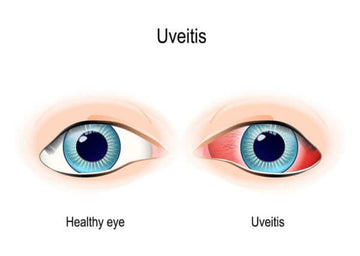
Eye redness. The redness associated with uveitis is often concentrated around the iris (perilimbal redness), which distinguishes it from the diffuse redness of conjunctivitis. This is an important sign that our optometrists in Gatineau look for during an eye exam.
Sensitivity to light (photophobia). Even moderate light causes discomfort or pain in the affected eye. This is a very characteristic symptom of anterior uveitis.
Small or irregular pupil. Inflammation can cause a spasm or adhesion of the iris, altering the size or shape of the pupil.
Important: Uveitis can resemble conjunctivitis at first, especially when the eye is simply red and uncomfortable. The difference is that uveitis causes deeper pain, marked sensitivity to light, and blurred vision. If you have any doubts, consult an optometrist in Gatineau rather than treating yourself with over-the-counter eye drops. A misdiagnosis can delay treatment and increase the risk of complications.
Causes of uveitis
Uveitis can have many possible causes. In about 40 to 50% of cases, the exact cause is never identified. Here are the most common causes:
Autoimmune diseases. The immune system mistakenly attacks the eye’s tissues. The conditions most commonly associated with uveitis include ankylosing spondylitis, juvenile idiopathic arthritis, sarcoidosis, Crohn’s disease, ulcerative colitis, and lupus.
Infections. Certain viruses, bacteria, and parasites can cause uveitis. The most common include the herpes simplex virus, the varicella-zoster virus, toxoplasmosis, syphilis, and tuberculosis.
Eye injuries. A blow to the eye, recent eye surgery, or a penetrating foreign object can trigger uveitis.
Idiopathic causes. In nearly half of all cases, uveitis occurs without an identifiable cause. The immune system appears to overreact without any apparent trigger.
Uveitis vs. Conjunctivitis: How Can You Tell the Difference?
Many patients confuse uveitis with conjunctivitis because both conditions cause redness in the eye. Here’s how to tell them apart:
Uveitis. Deep pain in the eye. Severe sensitivity to light. Blurred vision. Redness concentrated around the iris. The pupil may be small or irregular. Little or no discharge.
Conjunctivitis. A sensation of grit or itching rather than deep pain. Diffuse redness across the entire white of the eye. Clear or purulent discharge. Vision is generally normal. No marked sensitivity to light.
If you're not sure what's wrong, don't take any chances. See an optometrist in Gatineau. Treating uveitis with over-the-counter eye drops for conjunctivitis won't help and may delay essential treatment.
Diagnosis of Uveitis in Gatineau
Diagnosing uveitis requires a comprehensive eye exam. At Altitude Optometry in Gatineau, our optometrists perform:
Slit-lamp examination. This is the key test for diagnosing uveitis. The slit lamp allows for the visualization of inflammatory cells floating in the fluid inside the eye, a characteristic sign of uveitis. It also helps detect inflammatory deposits on the inner surface of the cornea (keratic precipitates) and adhesions between the iris and the lens (synechiae).
Measurement of intraocular pressure. Uveitis can cause intraocular pressure to rise or fall. Monitoring pressure is important to prevent secondary glaucoma.
Fundus examination with pupil dilation. This allows us to check whether the inflammation has spread to the retina and choroid and to detect any complications, such as macular edema.
OCT (optical coherence tomography). This test provides detailed images of the layers of the retina and can detect macular edema, a common complication of uveitis that can affect central vision.
All of these exams can be performed on the same day at Altitude Optometry in Gatineau, thanks to our eye emergency service, which is available 7 days a week.
Treatment of uveitis
The goal of uveitis treatment is to reduce inflammation, relieve pain, and prevent complications.
Topical corticosteroids (eye drops). This is the first-line treatment for most cases of anterior uveitis. Corticosteroid eye drops quickly reduce inflammation inside the eye. Our optometrists in Gatineau begin treatment as soon as a diagnosis is made to limit damage.
Cycloplegic drops (pupil-dilating drops). These drops dilate the pupil and temporarily paralyze the ciliary muscle. They are used to relieve pain and prevent the iris from sticking to the lens (synechiae), a complication that can occur if the inflammation is not treated promptly.
A leader in ophthalmology. Uveitis is a condition that requires specialized care. At Altitude Optometry in Gatineau, we make the diagnosis, initiate emergency treatment, and refer you directly to an ophthalmologist for further care. We have direct access to ophthalmologists in the region, allowing for a quick referral without you having to find a specialist yourself.
Possible complications without treatment
Untreated or improperly treated uveitis can lead to serious and irreversible complications:
Synechiae. The iris sticks to the lens, which can block the flow of fluid inside the eye and lead to secondary glaucoma.
Secondary glaucoma. Chronic inflammation or synechiae can increase intraocular pressure and cause permanent damage to the optic nerve.
Cataracts. Chronic inflammation and prolonged use of corticosteroids can accelerate the development of cataracts.
Macular edema. The buildup of fluid in the macula (the center of the retina) can cause a significant loss of central vision.
Retinal detachment. In severe cases, inflammation can cause retinal detachment, a medical emergency that requires surgery.
Permanent vision loss. Without treatment, uveitis can lead to irreversible vision loss. That is why it is so important to see an optometrist in Gatineau as soon as the first symptoms appear.
Frequently Asked Questions — Uveitis
Q: Is uveitis contagious?
No. Uveitis is an inflammation, not a contagious infection. Even when it is caused by a virus such as herpes, the inflammation inside the eye itself is not transmitted from one person to another.
Q: Can uveitis come back?
Yes. Uveitis can be recurrent, especially when associated with an autoimmune disease. Some patients experience only one episode in their lifetime, while others have periodic relapses. If your symptoms return, see an optometrist in Gatineau right away for a new diagnosis and a referral to an ophthalmologist.
Q: How long does uveitis last?
It depends on the severity and type. Acute anterior uveitis can resolve within a few weeks with proper treatment. More severe or chronic forms may last longer and require follow-up care from an ophthalmologist.
Q: Is uveitis the same thing as conjunctivitis?
No. Conjunctivitis is an inflammation of the surface of the eye. Uveitis is an inflammation of the internal structures of the eye. Uveitis is much more serious and requires different treatment. If you have a red eye with pain and sensitivity to light, see an optometrist in Gatineau to get the correct diagnosis.
Q: Should I go to the hospital emergency room?
For uveitis, an optometrist is the best-qualified professional to make the initial diagnosis and begin treatment. At Altitude Optometry in Gatineau, our eye emergency service is available 7 days a week, and we have direct access to local ophthalmologists for follow-up care. You’ll be seen more quickly by a professional specializing in eye health. Call 819-485-1085.
See an optometrist in Gatineau for uveitis
Do you have a red, painful eye that’s sensitive to light? Don’t take any chances. Uveitis is a serious condition that requires prompt diagnosis and treatment to protect your vision.
Our optometrists at Altitude Optométrie in Gatineau can see you the same day, make a diagnosis, begin treatment, and refer you to an ophthalmologist.
The clinic is located at 705 Davidson Street West, Suite 1, and is easily accessible from Hull, Aylmer, Templeton, Cantley, Buckingham, and Masson-Angers via Highway 50, Montée Paiement exit.